Trade Ministers Reaffirm Support for Landmark Climate-Trade Agreement at WTO Ministerial Conference
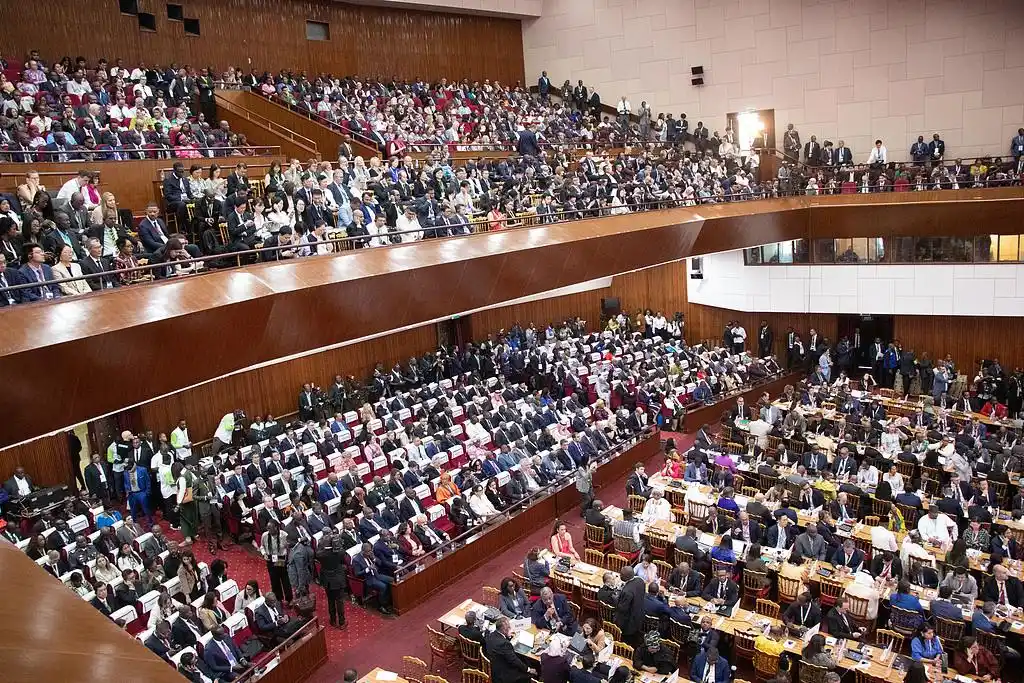
Ministers responsible for trade from Costa Rica, Iceland, New Zealand, and Switzerland have issued a joint statement strongly reaffirming their commitment to the Agreement on Climate Change, Trade, and Sustainability (ACCTS) during the 14th WTO Ministerial Conference.
The ministers, as signatories to the ACCTS, emphasised the agreement’s role as a forward-looking, rules-based initiative designed to advance trade and environmental policy in harmony with the multilateral trading system centred on the World Trade Organization (WTO).
“We, the Ministers responsible for Trade for Costa Rica, Iceland, New Zealand, and Switzerland, as signatories to the Agreement on Climate Change, Trade, and Sustainability (ACCTS) issue this statement on the occasion of the 14th WTO Ministerial Conference in Yaoundé, Cameroon on 29 March 2026,” the joint statement reads.
The ministers reiterated their strong support for the rules-based multilateral trading system with the WTO at its core. They applauded the WTO’s ongoing work to promote sustainable development and environmental protection, citing initiatives such as the Trade and Environmental Sustainability Structured Discussions, the Dialogue on Plastics Pollution, the Fossil Fuel Subsidy Reform Initiative, and discussions under the Committee on Trade and Environment.
Highlighting the strategic importance of the ACCTS, the ministers described it as “a clear and credible blueprint for advancing international, rules-based trade that balances decarbonisation and sustainability objectives with economic growth.” They underscored the mutual supportiveness of trade and environmental policy, stressing the need for coordinated international action in several key areas:
- Intensifying trade in environmental goods and services;
- Enhancing the quality and effectiveness of ecolabels through trade policy; and
- Disciplining and eliminating harmful fossil fuel subsidies.
The statement emphasised that the ACCTS is fully consistent with WTO rules and remains open to accession by any WTO member that meets the established principles for accession once the agreement enters into force. It also recognises the specific needs of developing members and low-income, remote, and vulnerable communities.
New Zealand and Iceland have now ratified the ACCTS, marking significant progress toward bringing the agreement into force as soon as possible. The ministers welcomed further accessions to amplify the agreement’s contribution to tackling climate change and fostering sustainability.
Looking ahead, the ministers announced plans to convene again in the margins of the Future Investment and Trade Partnership (FIT-P) Ministerial Meeting to be hosted by New Zealand later in 2026 to discuss ways to further advance the agreement’s objectives.
The ACCTS is positioned as a dynamic “pathfinder” agreement intended to complement and strengthen the broader WTO framework on trade and environmental issues.